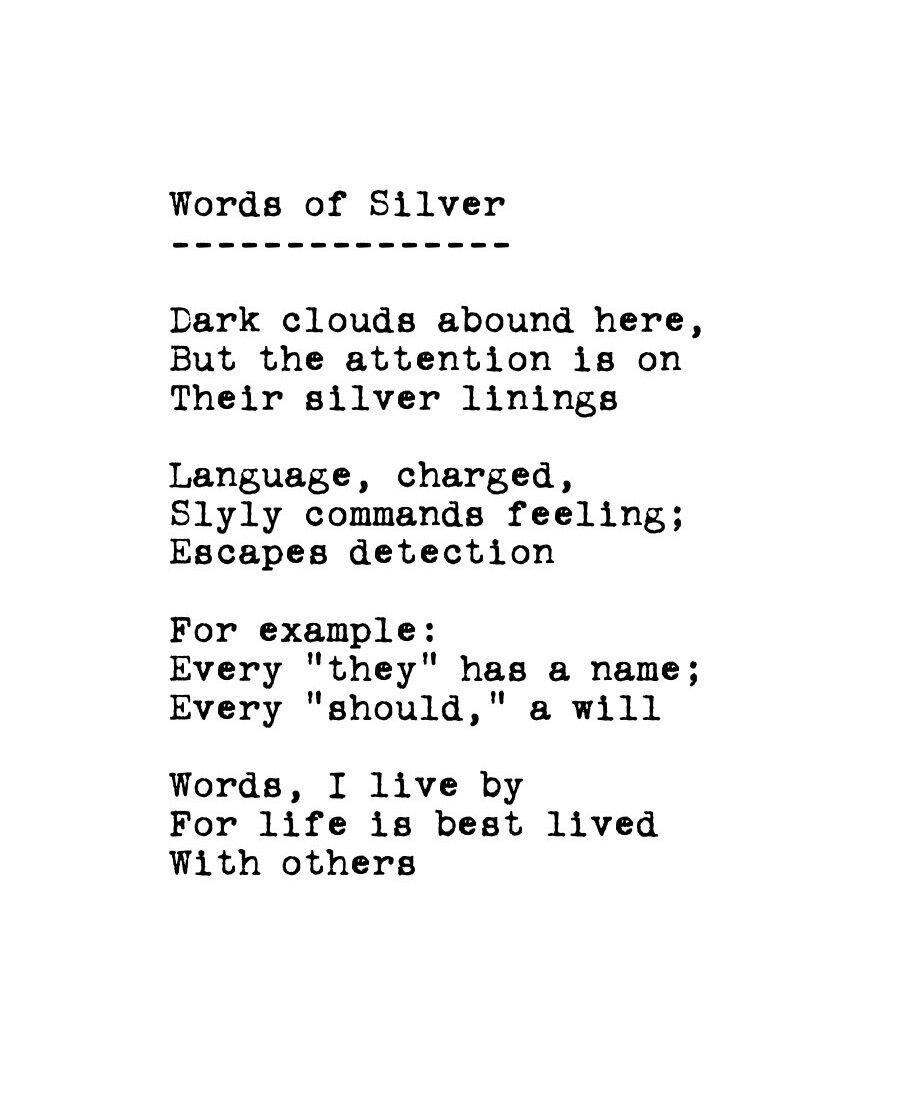
Listener Poet,
Co-Founding Team
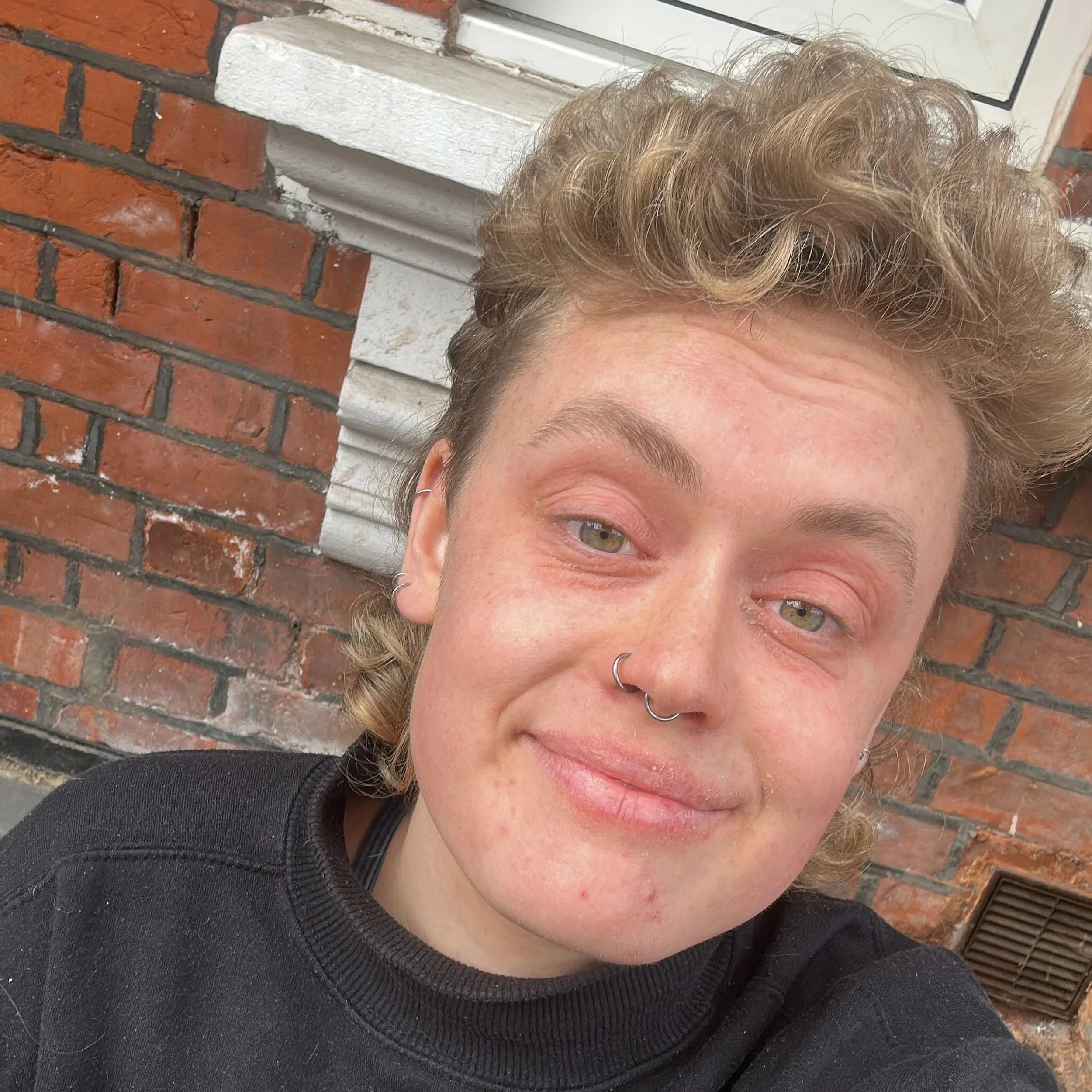
Beck Klassen (they/them) is a listener, a learner, a carer, and a writer. As a queer and trans/genderqueer/gender non-conforming/non-binary anarchist, they are regularly engaged in deconstructing oppressive social norms, both theoretically and in practice. Beck is a fierce proponent of prefigurative politics and spends their time infusing their values into how they move through the world.
Beck became The Good Listening Project's first Listener Poet in 2018 when they helped pilot the program at Sibley Memorial Hospital in Washington D.C. They have been working as a Listener Poet for nine years and recently stepped into the role of Operations Lead for The Good Listening Project, in which they support program delivery and generally try to make things better for everyone.
Beck holds a Bachelor’s Degree in Arts and Science from McMaster University, where they studied psychology, gender, aging, and health systems. Beck resides in Hamilton, Ontario, gardening and sharing space with two cats and cascading existential questions.
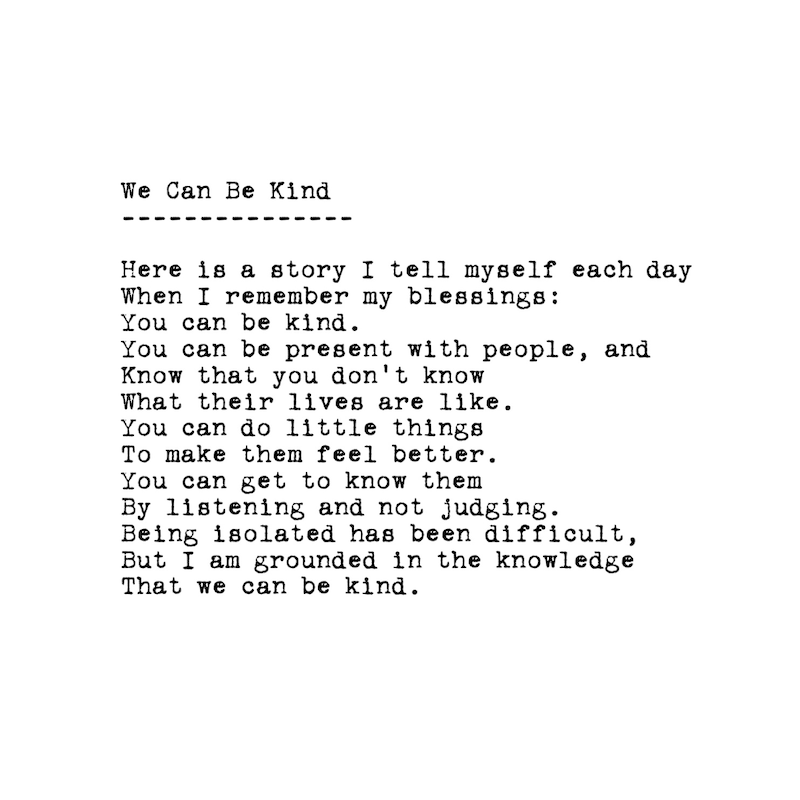
Through my poetry-inspired friendship with Frankie Abralind, I became an intern in his department at Sibley Memorial Hospital. I worked with Frankie to pilot the program in the hospital setting for about six weeks. Together, we realized how valuable the listening element of the conversation was for people.
“I’m trying to focus on doing little things to make people feel better during everything that’s going on in the world,” she told me.
“I like feeling small,” he told me. “Nature has always made me feel small.” He described the sense of wonder that feeling gave him.
“I feel like I have decision fatigue,” she told me. It was normal for her to make many choices at work, but COVID had dramatically increased the number of medical decisions she had to make at home.
Although he had been through many stressful experiences in his life and recently, he always held onto his positive outlook. He took particular care to use words intentionally, paying attention to their connotations, so that his positivity extended to those that he interacted with as well.
The pandemic had forced this woman to slow her life down drastically. Before, she’d travelled around every month for work, never stopping, working hard because she cared about her job. The slower pace created by social distancing had reminded her to cherish everything that life had to offer outside of work.
For a long time, he had used songwriting to turn his own emotions into artwork, but in the past eight years he had turned the process into a service for others. He’d learned that listening to people’s stories and reflecting them back in an artistic format was a cathartic experience for them.
"I’m ensconced in the system." He was getting paid quite well to do his job in the healthcare sector, but he had internal conflict about how the system worked. He asked me, "Did you know that about 50% of healthcare dollars are spent on the last six months of life?"
Being in healthcare can be extremely rewarding, but it comes with the occupational hazard of loss. This woman loved the work she did with dementia patients and the connections she was able to form with them. However, she also struggled with the frequent loss of people she had bonded with.